Islamic Relief Worldwide - Designing global guidelines for poverty programmes
Summary
Islamic Relief had been running intensive poverty reduction programmes across multiple countries for years, but practice was evolving in different ways and there was no single framework to guide design and implementation. I led a global learning process and wrote operational guidelines that brought experience together into a clear model now used by teams across several countries and shared with the wider international development community.
The challenge: from scattered practice to a coherent global approach
Islamic Relief had been implementing intensive poverty programmes across multiple countries for more than a decade. These programmes support households living in extreme poverty to stabilise their situation, build sustainable livelihoods and strengthen resilience over time. Strong results had been achieved, particularly in Bangladesh, with adaptations emerging in fragile and humanitarian contexts.
As the approach expanded, practice began to diverge. Country teams were interpreting and applying the model in different ways. Decisions about sequencing, staffing, monitoring and resource intensity were not always explicit. There was no shared global framework setting out minimum standards or clarifying how the programme aligned with Islamic Relief’s faith-based values.
Leadership wanted to consolidate learning and ensure that future programmes were designed with clarity and consistency. The organisation needed operational guidance grounded in field experience and usable by country teams.
See our services.
The process: designing the Guidelines with practitioners
I designed and facilitated a global learning process and authored the final Guidelines, working closely with an internal steering group.
The work began with a mapping of poverty programmes across Islamic Relief’s country offices, followed by deeper dives of selected projects to understand how the model had been adapted in practice. I conducted interviews with operational and strategic staff, facilitated virtual discussions with implementation specialists, and led an in-person workshop in Bangladesh where country teams tested emerging design principles against their experience.
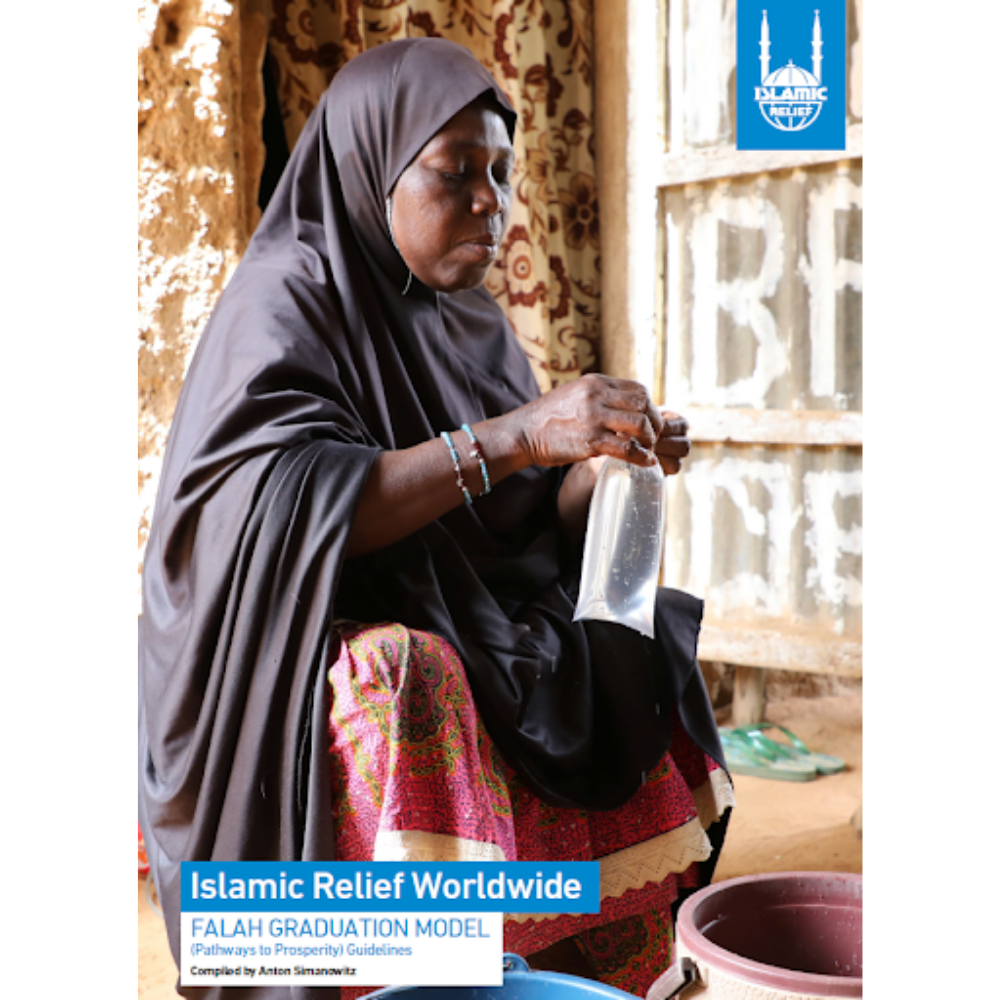
The final Guidelines set out a clear Theory of Change built around four integrated pillars, and provide detailed guidance on programme design, sequencing, staffing, monitoring and adaptive management. They also explain how the approach connects to Islamic Relief’s Maqasid framework, ensuring that technical guidance and faith-based principles are aligned.
What changed
The work brought together years of experience into a coherent organisational approach. The logic of the programme became explicit, including how different components fit together, the level of intensity required, and the conditions needed for results to be sustained.
Country teams now have a practical roadmap to guide assessment, design and implementation. This strengthens quality and consistency across contexts while allowing responsible adaptation to local realities.
At organisational level, the Guidelines provide a shared framework for decision-making, budgeting and monitoring. They support scaling while maintaining quality, and give donors and partners a clearer understanding of what the programme requires to be effective.
The publication of Graduation Model Guidelines also contributes to the wider economic inclusion field by making this learning accessible beyond the organisation.
As the project lead reflected:
“It’s been an absolute pleasure working with Anton… he was extremely diligent and detail orientated without ever losing sight of the bigger picture of what we were trying to achieve.”
She highlighted the way the process brought together different stakeholders, integrated best practice with faith-based principles, and ensured that the final guidance was practical for country teams to use.
The outcome is a framework that is now actively shaping how poverty programmes are designed and delivered across multiple countries.